How to Choose the Right Rug Size for Every Room
A rug that’s too small is the most common styling mistake I see in client homes, and it’s not close. It floats in the middle of the room, touches nothing, and makes a well-furnished space look unfinished. Getting the size right is mostly arithmetic, not taste.
The Rule That Fixes 90 Percent of Rug Problems
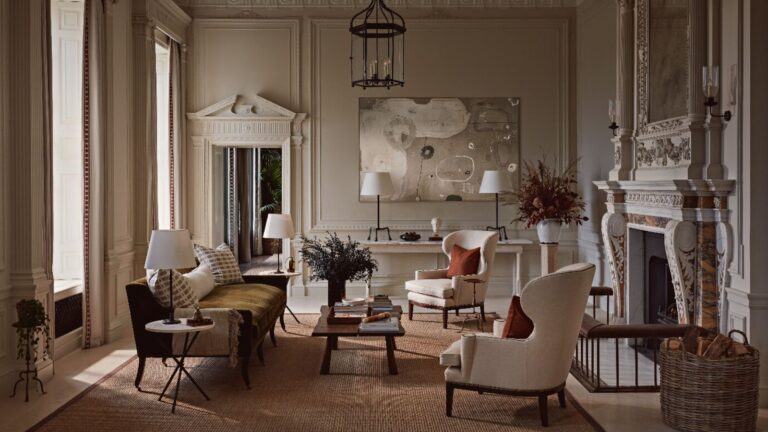
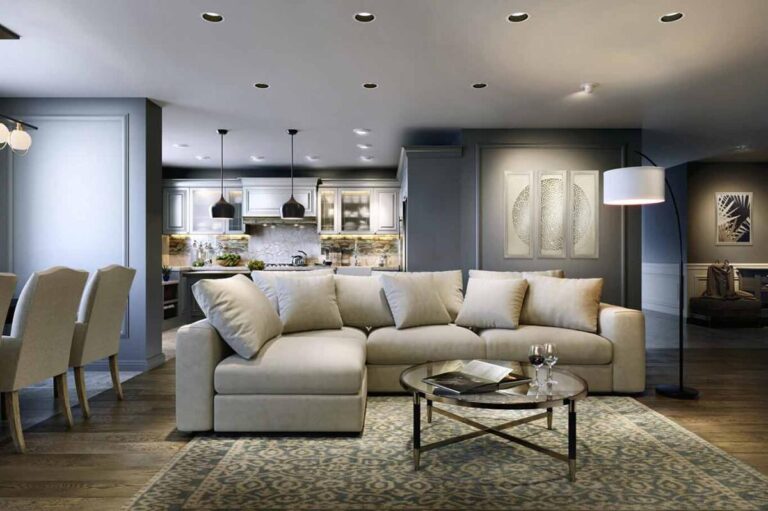
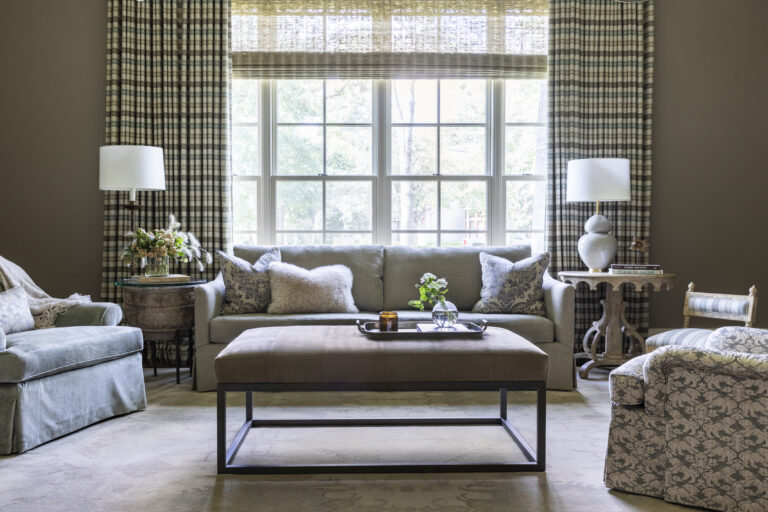
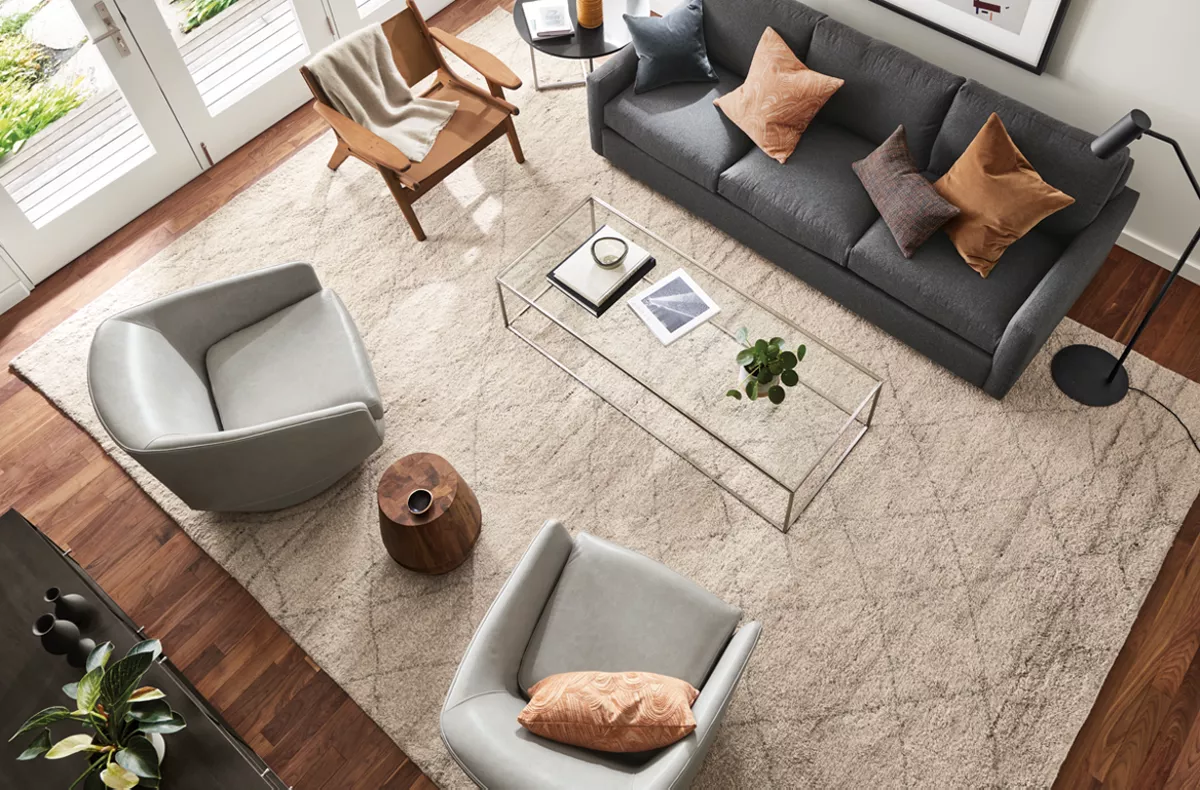
At minimum, the front legs of every major piece of seating should rest on the rug. The gold standard, when your room allows it, is all four legs of your main furniture pieces fully on the rug, which visually anchors the entire seating area as one unit rather than several separate islands.
If your rug doesn’t touch at least the front legs of your sofa and chairs, it’s too small for the room, no matter how nice the pattern is.
Living Room Rug Sizing
As a general spacing guide, leave 18 to 24 inches of bare floor between the rug’s edge and the walls in a living room. Less than that and the rug feels like it’s trying to be wall-to-wall carpet; more than that and it can look undersized even at a technically correct dimension.
| Room Size | Recommended Rug Size | Notes |
| Small (under 12×12 ft) | 5×8 ft | Front legs of sofa and chairs on rug |
| Medium (12×15 ft) | 8×10 ft | All furniture legs on rug if possible |
| Large (15×18 ft or more) | 9×12 ft or larger | Leave 18-24 inches of floor visible around the rug’s edge |
Dining Room Rug Sizing
Dining rugs need to account for chair movement, not just the table footprint. Measure the table, then add at least 24 inches on all sides so chairs stay fully on the rug even when pulled out to sit down. A chair leg catching the rug’s edge every time someone stands up is a signal the rug is too small.
For a standard 6-seat rectangular table (roughly 36 by 60 inches), an 8×10 rug is typically the minimum comfortable size. For larger tables or rooms, don’t hesitate to size up to a 9×12.
Bedroom Rug Sizing
Bedrooms have more flexibility than living or dining rooms because the rug’s job is often more about comfort underfoot than defining a seating zone. A few layout options work well depending on your bed size and budget.
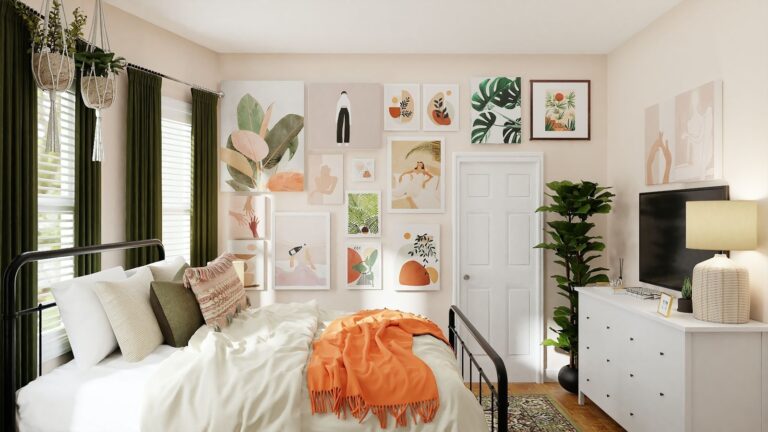
For a queen or king bed, a rug that extends at least 24 inches beyond both sides and the foot of the bed gives you a soft landing when you get up, whether the bed is centered on the rug or the rug sits mostly at the foot and sides.
Three reliable bedroom layouts:
- One large rug (8×10 or 9×12) centered under the bed and nightstands, extending well past both sides
- One runner-style rug on each side of the bed instead of one large rug
- A rug placed at roughly two-thirds under the bed, extending further out at the foot where you actually stand
Small Spaces and Layered Rugs
In an entryway or a small home office, a rug doesn’t need to follow living-room-scale rules, but it should still be large enough that you’re not stepping directly off it within one stride. A 2×3 or 3×5 runner in a narrow entry, sized to the width of the space minus a few inches of visible floor on each side, is usually correct.
Layering a smaller, patterned rug over a larger, neutral jute or sisal rug is a technique I use often in rentals and awkwardly shaped rooms, because it lets you define a specific zone (like a reading chair) without committing to one giant rug that has to work for the entire room.
Rug Shape Matters Almost as Much as Size
A round rug under a round or pedestal dining table echoes the shape of the furniture above it and tends to look more considered than a rectangular rug under a round table. In living rooms with a square or nearly square seating arrangement, a square rug can feel more balanced than a standard rectangular one, though rectangular remains the safest, most versatile default for most rooms.
Runners deserve their own sizing logic entirely. In a hallway, a runner should stop 4 to 6 inches short of the walls on either side and leave roughly 6 to 10 inches of bare floor at each end, rather than running wall to wall like carpet.
Material Choices That Affect How a Rug Wears Over Time
| Material | Best Rooms | Durability Notes |
| Wool | Living rooms, bedrooms | Highly durable, resists stains reasonably well |
| Jute or sisal | Entryways, dining rooms | Very durable but can be rough underfoot |
| Synthetic (polypropylene) | High-traffic or pet-heavy homes | Budget-friendly, easy to clean, less plush |
| Cotton | Low-traffic spaces, layered looks | Softer but wears faster under heavy use |
How Furniture Legs Should Sit on the Rug
Beyond simply touching the rug, furniture legs sitting a few inches in from the rug’s edge (rather than right at the very border) tends to look more intentional than legs balanced precariously on the rug’s fringe. As a guideline, aim for at least 6 to 8 inches of rug beyond any furniture leg when the room size allows it.
For sectionals with a chaise, make sure the rug extends under the full footprint of the chaise section as well, not just the main seating run, since an oddly shaped gap under one end of a large sectional is a common oversight in otherwise correctly sized rugs.
Home Office and Kids’ Room Rug Sizing
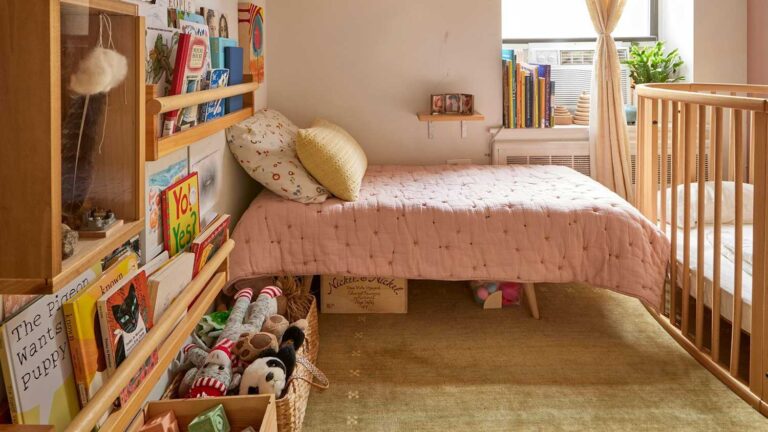
A home office rug should extend at least 24 to 30 inches beyond the desk chair’s full range of motion, including when the chair rolls back, so the chair never catches the rug’s edge mid-task. In kids’ rooms, a slightly larger rug than strictly necessary gives more usable play space and tends to outlast a size chosen to fit only the current furniture arrangement, since kids’ room layouts change more often than any other room in the house.
Buying Sample Swatches Before Committing to a Large Rug
Rugs are one of the more expensive decor purchases most people make, and color and pattern intensity often look different at full size versus in a small product photo. Many rug retailers offer swatches or small samples specifically for this reason, and it’s worth requesting one before ordering an 8×10 or 9×12 rug sight unseen, the same logic that applies to testing paint before committing to gallons.
Frequently Asked Questions
Is it better to size a rug up or down when in doubt?
Size up. A slightly oversized rug with generous floor border still looks intentional, while an undersized rug that floats without touching any furniture almost always reads as a mistake.
Can a rug be too big for a room?
Yes, if it runs edge to edge with almost no visible floor border, which can make the room feel like it’s wearing wall-to-wall carpet rather than a defined rug. Leaving at least 12 to 18 inches of visible floor around the rug’s perimeter usually solves this.
Should all four legs of a sofa be on the rug?
It’s the ideal, but not mandatory. At minimum, the front legs need to rest on the rug for the layout to feel connected. All four legs on the rug is the more polished, designer-standard look when the room size allows it.
What rug size works for an open-concept living and dining area?
Use two separate rugs, one sized correctly for the living zone and one sized correctly for the dining zone, rather than one giant rug trying to cover both. This helps define each zone within the open space.
How do I measure my room for a rug before buying?
Measure the full footprint of your main furniture arrangement first, then add the recommended clearance (18-24 inches for living rooms, 24 inches beyond a dining table’s edge) to get your target rug dimensions before you shop.
What rug material holds up best with pets or heavy foot traffic?
Synthetic materials like polypropylene are generally the most stain-resistant and budget-friendly for high-traffic or pet-heavy homes, though wool remains a durable, higher-end option that also resists staining reasonably well.
Is it ever fine to leave the front legs slightly off the rug?
In very tight rooms where a fully correct rug size simply won’t fit, having front legs on the rug is the acceptable minimum. It’s not ideal, but it still visually anchors the seating area far better than a rug with no furniture contact at all.
Should a rug pad always go underneath?
Yes, in almost every case. A rug pad prevents slipping, adds cushioning underfoot, and protects both the rug and the flooring beneath it from friction damage over time, regardless of the rug’s size or material.
Final Thoughts
Rug sizing comes down to one habit: measure your furniture footprint first, add the right clearance for the room type, and round up rather than down. Once the rug actually reaches your furniture, the whole room reads as finished, and that single change often does more visual work than any other single decor purchase.