
Budget Bedroom Refresh Ideas Under $200
You don’t need a new bed frame to make a bedroom feel different. You need to know which $200 gets spent where, because the same budget split five different ways barely moves the needle, while spent on the right three things, it transforms the whole room.
Spend the First $60 on Bedding, Not Decor
Your bed takes up more visual real estate than any other object in the room, often 30 to 40 percent of the total floor plan. A fresh, well-fitted duvet cover in a color that actually complements your walls will change the room’s entire feeling more than a new lamp, a piece of art, or a candle ever could.
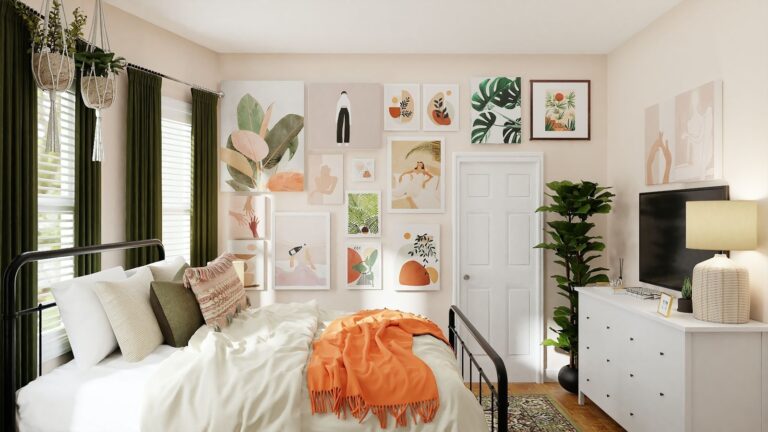
Prioritize fit over pattern. A duvet cover sized correctly for your insert, with corner ties or buttons actually fastened, looks dramatically more expensive than an ill-fitting cover in a nicer fabric. Add two European shams behind your standard pillows for the layered, hotel-bed look, which costs very little and reads as a major upgrade.
Put $40 Toward Lighting, Not Overhead
Overhead lighting in most bedrooms is harsh and unflattering, and swapping the fixture itself usually isn’t a $200-budget project. Instead, add one warm-toned table lamp or a plug-in wall sconce and turn the overhead light off entirely during evening hours.
A warm bulb (2700K to 3000K color temperature) makes an enormous difference here. Even an inexpensive lamp looks intentional under the right bulb color, while an expensive lamp under a cool, blue-toned bulb reads as sterile.
Reserve $50 for One Accent Wall Treatment
Pick the wall your bed sits against, the one you actually look at most, and give it one focused treatment rather than spreading decor evenly around the room. A gallon of paint in a saturated, confident color, or a roll of peel-and-stick wallpaper for renters, both fit comfortably in this budget line.
Skip the temptation to do all four walls. One wall done well outperforms four walls done half-heartedly, and it’s the difference between a room that photographs like an intentional design choice and one that just looks recently painted.
Use $30 on Textiles That Add Texture
A textured throw blanket at the foot of the bed and a woven or faux-fur accent pillow do more for a room’s perceived cost than most people expect, because texture reads as quality even in photographs, where color alone can look flat.
Mix at least two different textures (a knit throw with a smooth linen pillow, for example) rather than matching everything in the same fabric, which tends to look like a matching bedding set rather than a curated room.
Where the Remaining $20 Goes
| Option | Cost Range | Impact |
| Small potted plant or realistic faux greenery | $10-20 | Adds life and softens hard furniture lines |
| A single framed print above the bed | $15-20 | Fills the visual gap most beds leave on the wall behind them |
| A woven basket for visible storage | $15-20 | Hides clutter that undermines a fresh look instantly |
What to Skip When the Budget Is Tight
New furniture almost never belongs in a $200 refresh. A nightstand or dresser you already have will look completely different once the bedding, lighting, and wall are addressed, so resist the urge to replace furniture before you’ve changed the elements that actually carry the room’s atmosphere.
Multiple small decor purchases (candles, small trinkets, tiny frames) are the other trap. They add up fast and rarely move the needle individually. Every dollar spent on something small is a dollar not spent on bedding, lighting, or the wall, which are the three things that actually change how the room feels.
A Suggested Shopping Order If You’re Doing This in One Weekend
Buy bedding first and put it on the bed before you decide anything else. Seeing the new color and texture in the room, on the actual bed, often changes your mind about what wall color or accent pieces will actually work, so sequencing matters here as much as the budget split itself.
Handle the wall treatment second, since paint or wallpaper needs time to dry or set before you move furniture back against it. Lighting and textiles can be added last, in any order, since neither depends on the other being finished first.
Stretching the Budget Further With What You Already Own
Before buying anything new, do a full walk-through of other rooms in your home. A lamp from a rarely used guest room, a throw blanket that’s been living in a closet, or artwork from another wall can often fill one of the budget categories above for free, leaving more room in the $200 for the pieces you genuinely need to buy.
Rearranging existing furniture, moving a chair from another room into the bedroom as a reading nook, for example, is a zero-cost way to add function and visual interest before spending a single dollar of the refresh budget.
How to Make the Refresh Look More Expensive Than It Was
Ironing or steaming new bedding before it goes on the bed matters more than most people expect. Bedding straight out of the packaging often has deep fold lines that read as cheap in photos and in person, while pressed, wrinkle-free fabric immediately looks like a higher-end purchase regardless of what it actually cost.
Consistency in metal finishes across whatever small hardware you touch, a lamp base, a picture frame, a drawer pull, also reads as more expensive than a room with several different finishes scattered across a handful of budget purchases. Keep this detail in mind even on a tight budget, since it costs nothing extra to simply choose consistently.
Signs You Should Save Up Instead of Spending the $200 Now
If your bed frame is broken, your mattress needs replacing, or your walls have real damage beyond cosmetic wear, a decor refresh is the wrong project to tackle first. Cosmetic changes on top of a genuinely broken foundation won’t fix the room’s underlying problem and can end up feeling like a bandage rather than an improvement.
In those cases, it’s worth waiting and saving toward the actual structural or furniture fix rather than spending $200 on bedding and lighting that will eventually need to be redone once the bigger issue gets addressed.
Tracking What You Spent So the Next Refresh Is Easier
Keep a simple note of what you bought and what it cost as you go through this refresh. Not for budgeting anxiety, but because it makes your next refresh, whether that’s six months or three years from now, far faster to plan since you’ll already know which categories gave you the most visible return for the money in your specific room.
Frequently Asked Questions
What’s the single highest-impact change in a budget bedroom refresh?
New bedding, specifically a duvet cover that actually fits and complements your wall color. It covers the largest visual area of any object in the room and changes the overall feeling more than almost any other single purchase.
Can I refresh a bedroom without repainting?
Yes, though one accent wall treatment (paint or peel-and-stick wallpaper) tends to give the most dramatic before-and-after for the money. If painting isn’t possible, put that budget toward better bedding and lighting instead.
Should I buy a new bed frame on a $200 budget?
No. A bed frame is a larger investment that rarely fits a $200 total budget once you factor in bedding, lighting, and wall treatment. Focus the smaller budget on what’s layered on top of the existing frame first.
What bulb color should I use for bedroom lighting?
A warm white bulb in the 2700K to 3000K range creates a cozier, more flattering light than the cooler 4000K+ bulbs common in overhead fixtures, and it makes even an inexpensive lamp look intentional.
How do I make a rental bedroom feel refreshed without breaking the lease terms?
Stick to bedding, a plug-in lamp, removable wallpaper on one wall, and textiles like a throw or accent pillow. All of these are fully reversible at move-out and don’t require any permanent changes to the space.
What order should I tackle a budget bedroom refresh in?
Start with bedding, since seeing it on the actual bed helps guide every other decision. Handle any paint or wallpaper next since it needs drying time, then finish with lighting and textiles in any order.
Is it worth buying two duvet covers to rotate seasonally?
If budget allows after the initial refresh, yes, since a lighter cover for warmer months and a heavier or richer-toned one for winter keeps the room feeling current without any additional spending on furniture or paint.
Can I do this refresh gradually instead of all in one weekend?
Yes, and spreading purchases over a few weeks often leads to better decisions anyway, since living with the new bedding for a few days before choosing wall color or lighting gives you a clearer sense of what the room actually needs next.
Final Thoughts
A $200 bedroom refresh works when the money goes to bedding, lighting, one accent wall, and texture, in that order of priority. Skip new furniture and skip scattering the budget across small trinkets. Concentrate the spend on the few things that actually change how the room feels, and the results will look far more expensive than the receipt.