How to Decorate a Home Office That Doesn’t Feel Like a Cubicle
A home office feels like a cubicle when it’s built entirely around function and nothing else, a desk, a chair, a monitor, and no evidence that a person with actual taste works there. The fix isn’t abandoning function, it’s layering personality and comfort around it the same way you would any other room.
Start With the Wall Behind Your Screen, Not the Wall Behind You
Most home office decorating advice focuses on the wall visible in video calls, which matters for appearances but ignores that you spend all day looking the opposite direction, at the wall behind your monitor. Treat that wall as the one that actually needs to keep you inspired and comfortable, since it’s the one you’re staring at for hours, not the one other people see for thirty minutes at a time.
A piece of art you genuinely love, a corkboard for visual reference, or even a single framed photo within your natural sightline does more for how the space feels to work in than anything styled purely for a camera.
Choose a Desk That Doesn’t Look Like It Came From an Office Supply Store
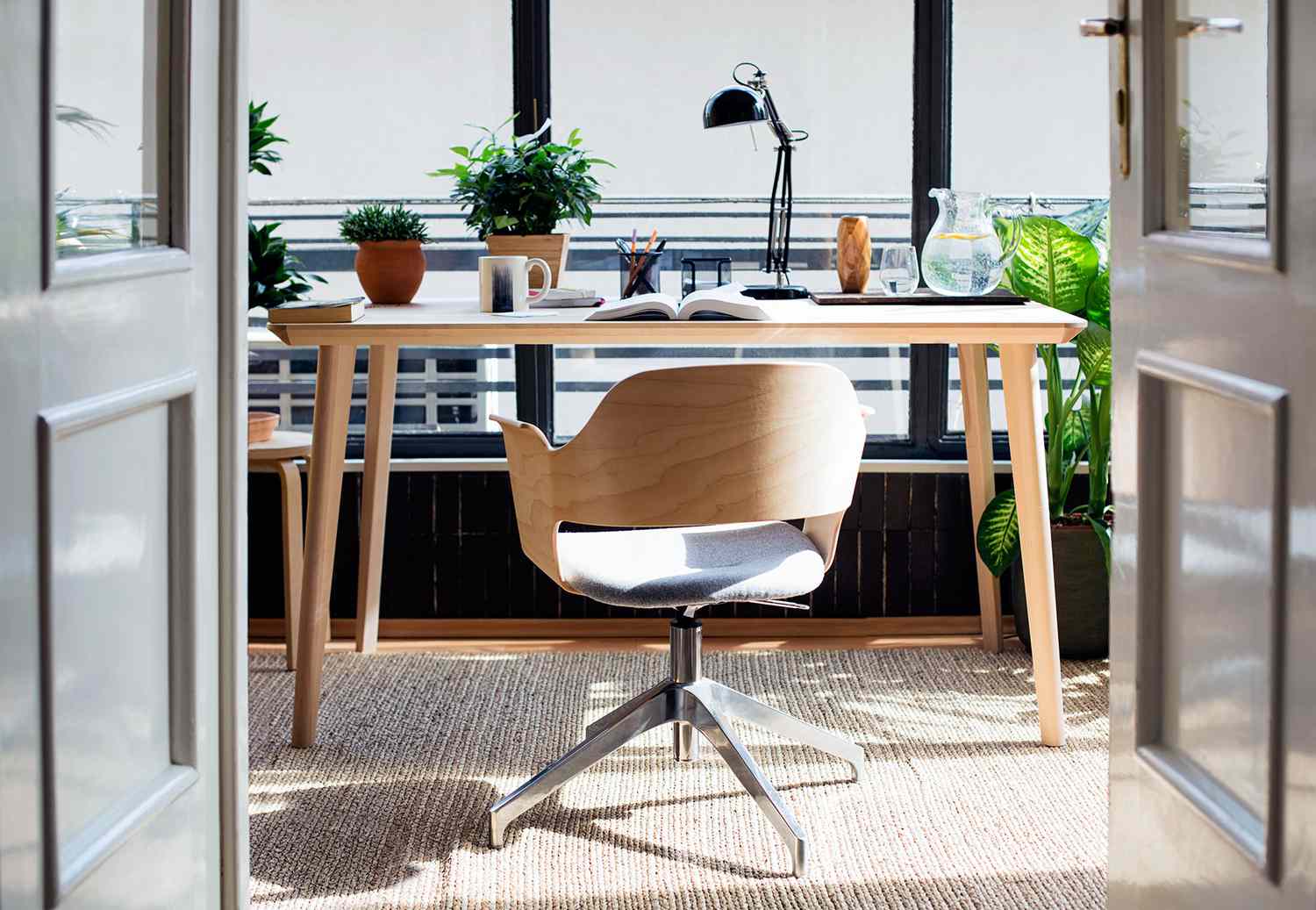
A wood or stone-topped desk, or a metal-frame desk with a warmer finish, immediately reads as residential rather than corporate compared to a standard laminate office desk. If you already own a laminate desk and aren’t ready to replace it, a large desk pad in leather or a natural material covers most of the visible surface and changes the material feel significantly for a fraction of the cost.
Position the desk to face into the room or toward a window rather than against a blank wall whenever the layout allows it. Facing a wall for eight hours a day contributes more to that boxed-in, cubicle feeling than almost any other single layout choice.
Layer Lighting the Same Way You Would Any Other Room
A single overhead fixture and a harsh desk lamp is the lighting formula of an actual cubicle. Add a warm-toned floor or table lamp somewhere in the room beyond just the desk task light, and if possible, position your desk near a window for natural light during the day.
Position any desk lamp to the side of your monitor rather than directly behind or in front of it to avoid screen glare, and choose a warm bulb in the 2700K to 3000K range for the ambient layer, saving cooler, brighter light only for the specific task lamp if needed for detailed work.
Bring in Materials and Textures From the Rest of Your Home
| Element | Cubicle Version | Residential Version |
| Desk chair | Standard black mesh office chair | Upholstered or leather task chair in a warmer tone |
| Storage | Metal filing cabinet | Woven baskets or a wood-toned credenza |
| Flooring | Bare or plastic chair mat | A well-chosen rug under the desk area |
| Wall decor | Bare walls or a single motivational print | Art, a gallery wall, or a mix of shelving and plants |
Hide the Cords and the Cable Clutter
Visible cable clutter is one of the fastest ways to make even a beautifully decorated office look unfinished and utilitarian. A cable tray mounted under the desk, cord clips along the desk’s back edge, and a simple fabric sleeve to bundle cords running to the floor all take under an hour to install and make a noticeable difference in how organized the whole space feels.
A power strip mounted underneath the desk rather than sitting visibly on the floor or the desktop also removes one of the more common, purely functional eyesores from the room’s overall visual field.
Add a Plant or Two, Even If You’re Not a Plant Person
A home office is often the room in a house with the least organic material, since it tends to be filled with hard-edged electronics and furniture. A single medium-sized plant on the floor or a smaller one on a shelf introduces the kind of softening, organic element that immediately reads as more residential and less corporate, and low-maintenance options like a pothos or a snake plant tolerate inconsistent light and watering schedules well.
Acoustic Comfort Matters More Than People Expect
Home offices in converted bedrooms or open corners of a living space often have harder surfaces and more echo than a purpose-built office, which contributes to a subtle but real sense of discomfort during calls or focused work. A rug under the desk area, curtains rather than bare blinds, and even a fabric-covered bulletin board all absorb sound and soften the room’s acoustics alongside their decorative function.
This matters especially for anyone on frequent video calls, since a room with better sound absorption also tends to sound clearer on the other end of a call, not just feel calmer to sit in.
Building in a Sense of Transition Between Work and Home
One reason home offices feel like cubicles is that there’s no psychological boundary between clocking in and being at home, unlike an actual commute that used to separate the two. A small ritual object or transition cue, closing a door, switching on a specific lamp only during work hours, or hanging a curtain across an open nook when the day starts, gives the space (and your brain) a clearer sense of when work begins and ends.
This is especially useful in a studio apartment or a shared-purpose room, where the desk might sit in a corner of the bedroom or living room rather than behind its own door. A visual signal, even something as simple as a folding screen you open only during work hours, does more for that mental separation than any amount of decor alone.
Storage That Looks Good and Actually Gets Used
Paper clutter is one of the fastest ways for an otherwise decorated office to slide back toward cubicle territory. A closed file box or a set of matching document boxes on a shelf handles the same job as a metal filing cabinet without the institutional look, while remaining just as functional for anyone who still deals with physical paperwork regularly.
For smaller supplies, pens, notebooks, cables, a woven basket or a set of matching ceramic or wood trays on the desk itself keeps everyday items accessible without looking like loose office supply clutter scattered across the work surface.
Personalize Without Cluttering the Work Surface Itself
Keep the actual desktop reserved for what you use daily, since a cluttered work surface undermines focus regardless of how nicely decorated the rest of the room is. Personality and decor belong on the walls, a nearby shelf, or a credenza, not stacked around your keyboard and monitor.
A single, meaningful object on the desk itself, a small plant, a photo, or an object with personal significance, does more for the space’s personality than a desk covered in a dozen small decorative items competing with your actual workspace.
Frequently Asked Questions
What makes a home office feel like a cubicle?
Usually a combination of harsh single-source lighting, an office-supply-store desk, visible cable clutter, and a total absence of personal or organic elements like art or plants. Fixing any two or three of these makes a noticeable difference.
Should my desk face a window or a wall?
Facing into the room or toward a window, rather than directly at a blank wall, generally feels less confining over a full workday, though a window directly behind your monitor can create glare on video calls worth considering.
How do I hide cables in a home office without an electrician?
Under-desk cable trays, cord clips along the desk’s back edge, and fabric cord sleeves are all simple, tool-free additions that noticeably reduce visible clutter within an hour or two of setup.
What plants work well in a home office with limited natural light?
Pothos, snake plants, and ZZ plants all tolerate lower or inconsistent light and irregular watering schedules well, making them reliable choices for offices without strong natural daylight.
Is it worth replacing a laminate desk to make an office feel less corporate?
Not necessarily. A large leather or natural-material desk pad covers most of the visible laminate surface and changes the material feel significantly for far less than a full desk replacement.
Does a rug really help a home office feel better to work in?
Yes. Beyond the visual warmth, a rug absorbs sound in rooms with hard flooring, which reduces echo during video calls and makes the space feel calmer for focused work throughout the day.
How do I create separation between work and home in a one-room setup?
A small transitional ritual helps, closing a door, using a specific lamp only during work hours, or opening a folding screen at the start of the day. These visual and physical cues signal a boundary even when the desk shares a room with living space.
How do I handle paperwork storage without it looking corporate?
Closed file boxes or matching document boxes on a shelf handle the same function as a metal filing cabinet without the institutional look, while still keeping paperwork organized and accessible.
Final Thoughts
A home office stops feeling like a cubicle once it has warm layered lighting, real materials instead of laminate and metal, hidden cables, and at least one personal or organic touch within your daily sightline. None of it requires a full renovation, just the same layering approach you’d bring to any other room in the house.