How to Style a Bedroom Dresser Top
A dresser top has one of two fates in most bedrooms: it becomes a catch-all for loose change and half-folded laundry, or it stays so precisely staged that nobody actually uses it. The goal is a middle ground, styled enough to look intentional, functional enough to survive daily life.
Reserve Two-Thirds of the Surface for Styling
As a starting ratio, dedicate about two-thirds of the dresser’s surface to a styled vignette and leave the remaining third genuinely open for daily use, a spot to set down keys, a watch, or a phone overnight without disrupting the styled section.
This ratio matters because a fully styled surface with zero functional space gets pushed aside within a week of daily use, while a fully functional, undecorated surface never gets the chance to look finished. Splitting the difference is what actually survives contact with real life.
Anchor With a Mirror or Art
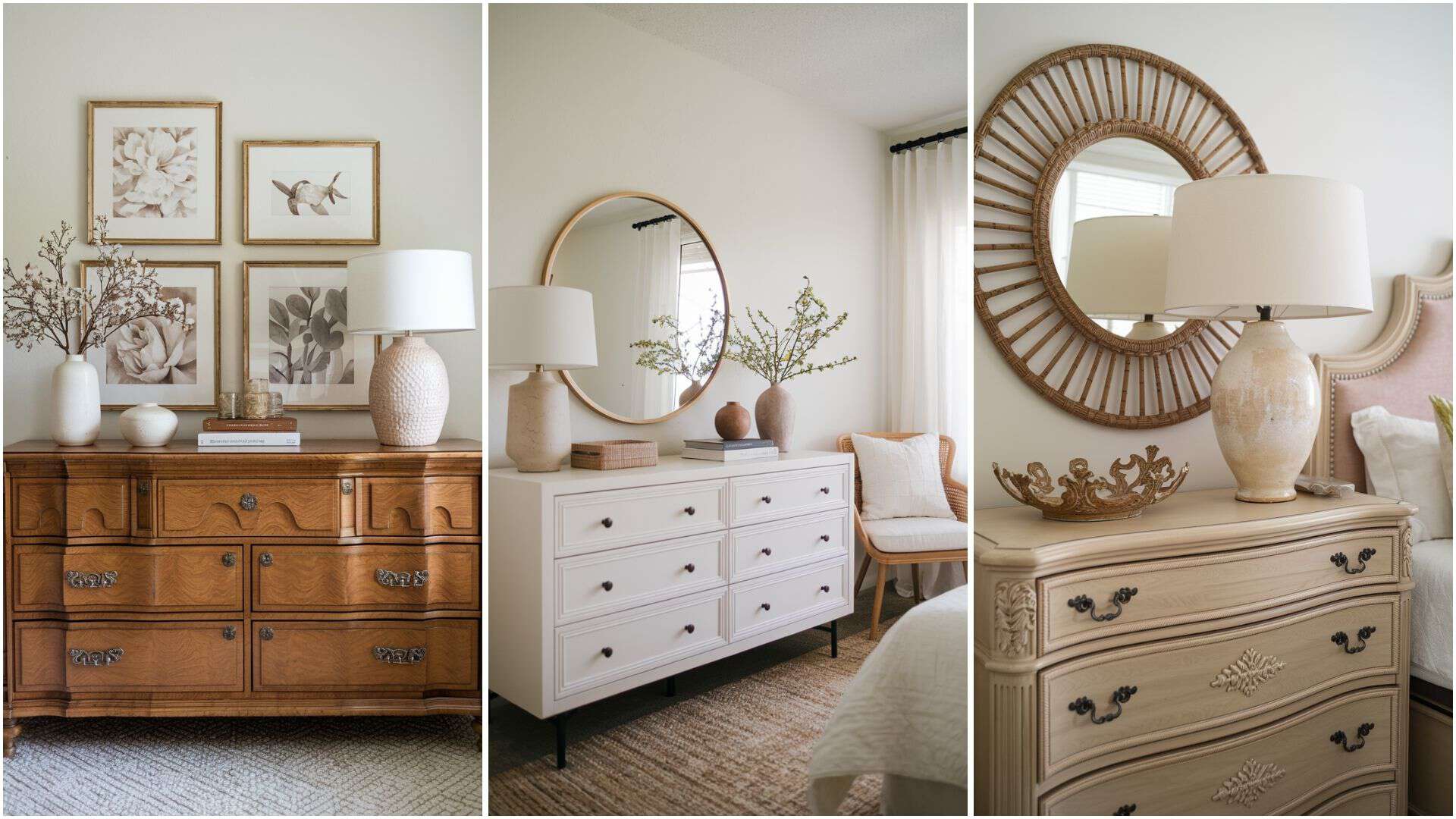
A mirror leaned against the wall behind the dresser, or a piece of art hung above it, gives the whole surface a vertical anchor point the same way art above a console table does. This single addition does more to make a dresser top look considered than any number of small objects placed without a backdrop.
If the dresser sits under a window, skip the leaning mirror or art and let the window itself serve as the visual anchor instead, styling the surface below it more simply so it doesn’t compete with the natural light and view.
Group in Odd Numbers by Height
The same three-height, odd-number grouping principle covered in our open shelving guide applies directly to a dresser top. A lamp on one side, a mid-height object in the center, and a low stack or dish rounding out the arrangement creates the same visual rhythm at a smaller scale.
| Zone | Object Type | Example |
| Tall | Lamp, vase, or framed photo | Table lamp for reading light near the mirror |
| Medium | Jewelry tray, small plant, or box | A catchall tray for daily jewelry |
| Low | Books, small stack, or dish | Two stacked books with a small object on top |
Function-First Objects That Still Look Good
A dresser top’s daily function, catching jewelry, a watch, loose coins, doesn’t have to look purely utilitarian. A shallow ceramic or wood catchall dish does the same job as a random pile but reads as a deliberate design choice rather than clutter.
If you use the dresser for a jewelry collection specifically, a small tray with defined compartments keeps pieces from tangling while still displaying them attractively, which works better than a closed jewelry box if you want the surface to feel personal and lived-in rather than sparse.
Scale to the Dresser’s Actual Size
A tall, narrow dresser typically supports a taller lamp and fewer, larger objects, while a long, low dresser (common in mid-century and modern styles) suits a wider, more horizontal arrangement with more small objects spread across the surface rather than stacked vertically.
Avoid placing objects so large they overwhelm the dresser’s own proportions; as a rough guide, your tallest styled object shouldn’t exceed about 40 percent of the dresser’s width, or it starts to visually dominate the piece of furniture it’s sitting on rather than complementing it.
Keep a Rotation System for What’s On Top
Because a dresser top gets touched daily, it accumulates clutter faster than almost any other surface in the bedroom. Doing a quick 60-second clear-and-reset each morning, putting away anything that migrated onto the surface overnight, keeps the styled two-thirds actually looking styled rather than slowly disappearing under daily debris.
Seasonally swapping one or two smaller objects, a different candle scent, a fresh stem of greenery, keeps the vignette feeling current without requiring you to rebuild the whole arrangement from scratch every few months.
Dresser Top Styling in Small Bedrooms
In a small bedroom where the dresser might also serve as a de facto nightstand or charging station if it sits close to the bed, keep the functional third of the surface positioned nearest the bed itself, and reserve the styled two-thirds for the far end, away from what you reach for at night.
A slim tray placed at the functional end keeps a phone charger, glasses, and a small light from spreading loosely across the surface, which matters even more in a small bedroom where the dresser may be doing double duty as both storage and a secondary nightstand.
Choosing Objects That Reflect Who Lives in the Room
A dresser top is one of the more personal surfaces in a home, closer in spirit to a nightstand than a living room console that guests might see. It’s a reasonable place to display a meaningful photo, a travel souvenir, or a small collection that wouldn’t necessarily fit the more curated, guest-facing styling of a living room shelf.
This personal touch doesn’t need to compromise the styling principles above; a meaningful object still benefits from being placed within the same height-and-grouping structure as anything else on the surface, rather than sitting alone in a way that reads as an afterthought.
Working Around a Wall-Mounted TV or Speaker
In bedrooms where a dresser sits below a mounted TV, keep styling simpler and lower-profile than you would otherwise, since a busy vignette competes visually with the screen the same way it does above a fireplace mantel. A few low, wide objects rather than anything tall works better in this specific setup.
If a soundbar or speaker sits on the dresser itself, treat it as one of the three height zones rather than an obstacle to style around, incorporating it into the overall arrangement instead of pushing decor awkwardly to either side of it.
Dresser Styling in a Shared or Guest Bedroom
A dresser in a guest room benefits from slightly more neutral, less personal styling than one in a primary bedroom, since it’s meant to feel welcoming to a visitor rather than reflect the homeowner’s specific collections and mementos. A simple lamp, a small dish for a guest to empty their pockets into, and a plant or a single piece of art usually strikes the right balance.
In a shared bedroom, whether between partners or siblings, dividing the dresser top visually, even just an imaginary line down the center, gives each person their own small styled or functional zone rather than one person’s items gradually taking over the entire surface.
Frequently Asked Questions
How much of a dresser top should be styled versus left open?
Roughly two-thirds styled and one-third left open for daily use, like setting down keys or a phone. This split keeps the surface functional enough to survive daily life while still looking intentional.
Should I put a mirror on every dresser?
Not necessarily. A leaning mirror or piece of art above the dresser works well as a vertical anchor, but a dresser positioned under a window can let the window itself serve as the focal point instead.
How do I keep a dresser top from becoming a catch-all mess?
A shallow catchall dish for jewelry, coins, and small items gives daily clutter a defined home, and a quick 60-second reset each morning prevents overnight buildup from taking over the styled portion of the surface.
What size objects work best on a dresser top?
As a rough guide, the tallest styled object shouldn’t exceed about 40 percent of the dresser’s width, or it starts to visually overwhelm the piece of furniture it sits on rather than complementing it.
Should dresser top decor match the rest of the bedroom’s color palette?
It helps for cohesion, but a dresser top is also a reasonable place to introduce a small personal touch or a slightly different accent color, since it’s a smaller, more contained surface than a wall or major furniture piece.
Can a dresser double as a nightstand in a small bedroom?
Yes, if it sits close enough to the bed. Keep the functional third of the surface nearest the bed for nightly essentials, and reserve the styled two-thirds for the far end so the two purposes don’t visually compete.
How do I style a dresser with a TV mounted above it?
Keep the arrangement simpler and lower-profile than usual, favoring a few low, wide objects rather than anything tall, since a busy display competes visually with the screen the same way it would above a fireplace mantel.
Should a guest bedroom dresser be styled differently than a primary bedroom one?
Yes, slightly. A guest room dresser benefits from more neutral, welcoming styling, a lamp, a small dish, a plant, rather than the personal photos and mementos that suit a primary bedroom dresser well.
What’s a quick weekly habit that keeps a dresser top looking styled?
A short reset at the end of each week, returning anything that migrated onto the surface to its proper home and straightening the styled grouping, prevents the slow creep of clutter that eventually buries an otherwise well-designed arrangement.
Final Thoughts
A dresser top looks finished when it balances styling with actual daily function, not when every inch is perfectly arranged. Anchor it with a mirror or art, group objects in odd-numbered, varied heights, and leave real room for the things you actually use every day.