How to Choose Wall Art for a Large Empty Wall
A large blank wall is one of the most common complaints I hear from clients, mostly because a single small print looks lost on it no mater how nice the piece is. The fix isn’t necessarily a bigger piece of art, it’s often a different approach to scale entirely.
Match Art Scale to the Wall, Not to the Piece You Love
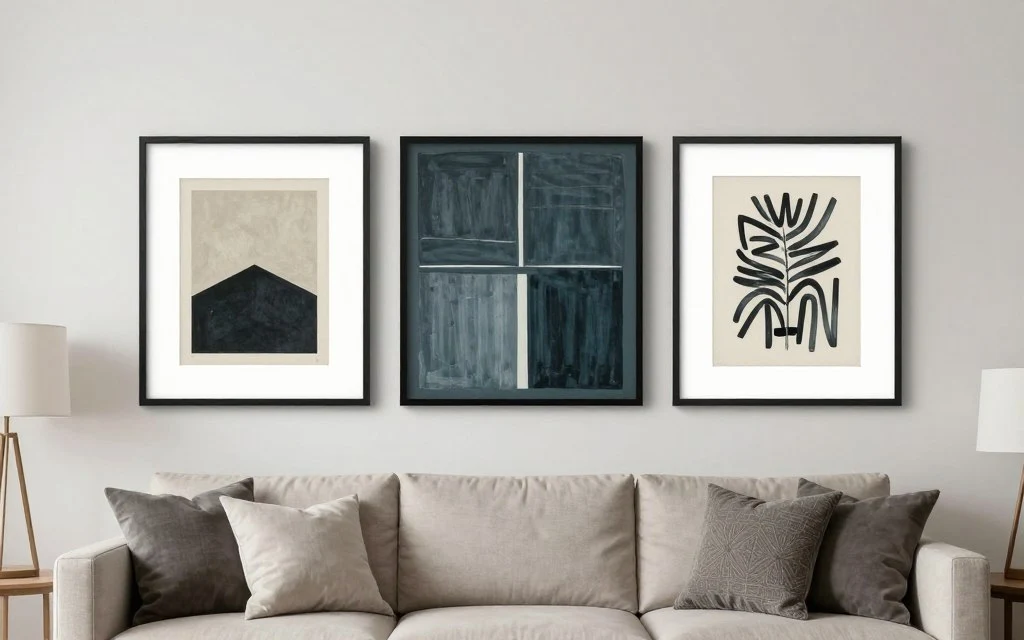
A single large-scale piece should cover roughly 60 to 75 percent of the available wall width above a piece of furniture, like a sofa or a bed. On a truly large, freestanding wall with no furniture reference point, aim to fill at least half the wall’s total width with either one oversized piece or a coordinated grouping.
This is where most people go wrong: they buy a piece of art they love at a size that felt reasonable in a gallery or online listing, then hang it on a 12-foot wall where it reads as an afterthought rather than a focal point.
One Oversized Piece Versus a Gallery Wall
A single oversized piece works best when you want a clean, confident statement and the wall doesn’t have other competing decor nearby. It’s also the lower-effort option since there’s no arrangement math involved, just correct sizing and correct height.
A gallery wall works better when you want to display multiple pieces with personal meaning, or when your budget doesn’t stretch to one large statement piece. The tradeoff is that a gallery wall takes more planning to avoid looking scattered, which is where a lot of DIY attempts go wrong.
| Approach | Best For | Planning Effort |
| Single oversized piece | Clean, confident statement walls | Low, mainly sizing and height |
| Gallery wall (uniform frames) | Cohesive but varied content | Medium, needs consistent spacing |
| Gallery wall (mixed frames) | Eclectic, collected-over-time look | High, needs careful balance |
Gallery Wall Math That Actually Works
Before hammering a single nail, lay out your full grouping on the floor first, then trace it onto kraft paper and tape the paper templates directly to the wall to test spacing. This single step prevents almost every gallery wall regret.
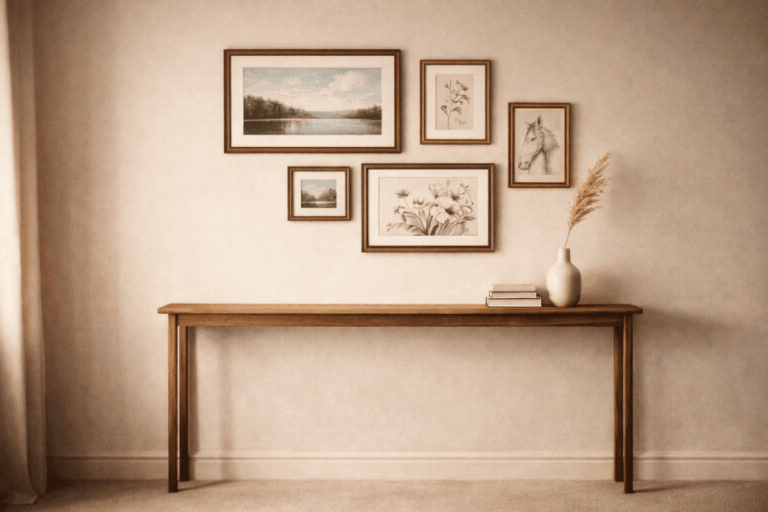
Keep spacing between frames consistent, generally 2 to 3 inches, and anchor the whole grouping around one larger or more visually dominant piece rather than making every frame the same size. A grouping of all-identical sizes tends to look more like a grid pattern than an intentional collection.
Get the Height Right
The center of any piece of art, whether a single statement piece or the center point of a gallery grouping, should land at roughly 57 to 60 inches from the floor, which is the standard eye-level height used in most galleries and museums.
Above furniture, leave 6 to 12 inches of breathing room between the top of the furniture and the bottom of the art. Less than that and the art looks like it’s hovering awkwardly; more than that and the piece disconnects from the furniture entirely and starts to look randomly placed on the wall instead.
When One Piece of Art Isn’t the Right Answer
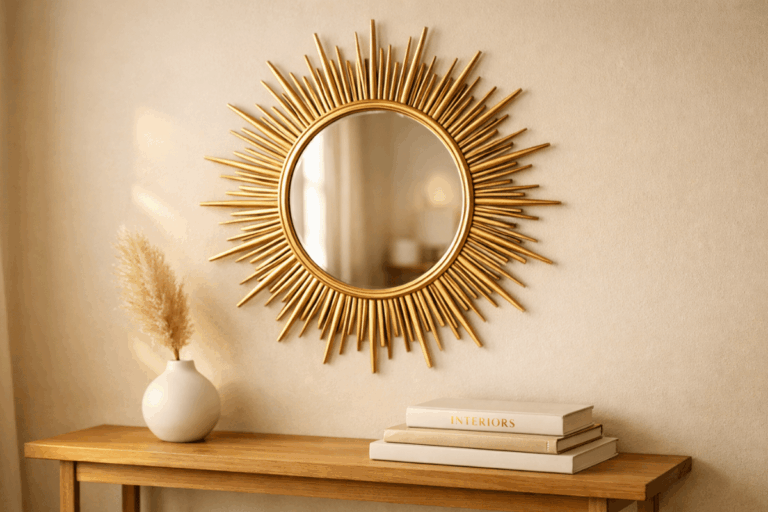
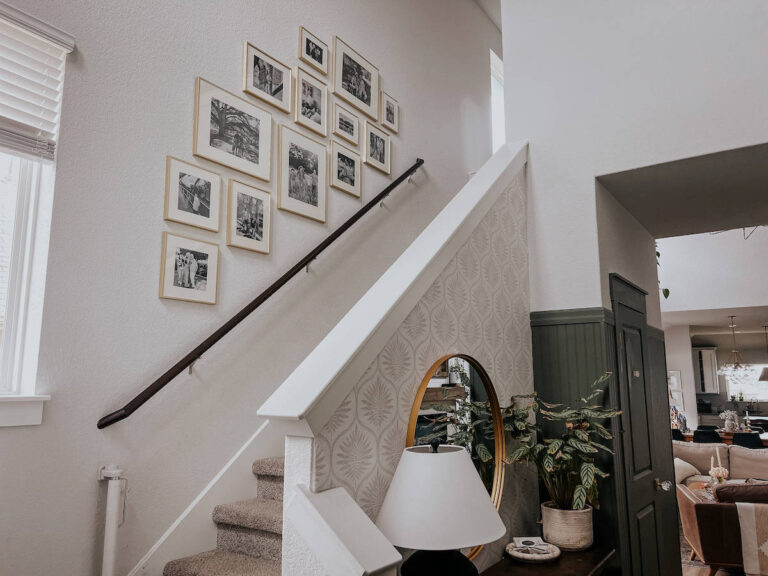
Some large walls, particularly stairwells or double-height entryways, aren’t well suited to a single flat piece of art no matter the size. In these cases, a large woven textile, an oversized mirror, or a sculptural wall installation (dimensional wood pieces, a curated arrangement of plates or objects) can fill the space with more visual interest and depth than a flat print ever could.
Lighting also matters more on a large wall than a small one. A picture light or a well-placed floor lamp aimed toward the art keeps a large piece from disappearing into shadow once the sun goes down, especially in rooms that rely mostly on overhead lighting in the evening.
Budget-Friendly Ways to Fill a Large Wall
Oversized original art gets expensive fast, but large-format prints, tapestries, and even a dramatically scaled mirror all achieve the same sense of scale for a fraction of the cost. A grid of smaller, inexpensive prints in identical frames, hung with consistent spacing, can also fill a large wall convincingly without requiring a single expensive statement piece.
Choosing Art That Fits the Room’s Existing Palette
A large piece of art carries so much visual weight that its color palette effectively becomes part of the room’s overall color scheme, whether you intended that or not. Pull at least one dominant color from the piece and make sure it’s already present elsewhere in the room, in a pillow, a rug, or an accent chair, or the art will feel disconnected from everything around it no matter how well it’s sized and placed.
If you’re drawn to a piece with colors that don’t currently exist anywhere else in the room, that’s not necessarily a problem, but plan to introduce a small echo of that color somewhere else (even a single vase or a stack of books) so the art doesn’t read as the only source of that color in an otherwise unrelated palette.
Hanging Hardware for Oversized Pieces
Large art gets heavy fast, and standard picture hooks rated for lightweight frames simply aren’t built for a piece that spans several feet. Use a French cleat system (a two-piece interlocking bracket, one half on the wall, one on the frame) for anything over roughly 30 pounds, since it distributes weight far more evenly across the wall than a single hook or nail ever could.
For plaster or older walls where studs don’t line up conveniently with your desired placement, heavy-duty toggle anchors rated for the piece’s specific weight are worth the extra few dollars over standard drywall anchors, especially for anything hanging above a sofa or bed where a fall could cause real damage or injury.
Renting? How to Fill a Large Wall Without Permanent Damage
Renters facing a large blank wall have more options than assumed. Rated adhesive strips can support surprisingly substantial lightweight pieces, like large canvas prints or foam-mounted art, as long as the weight limit is checked carefully against the piece’s actual weight, not just its size.
A large leaning piece, propped against the wall on the floor rather than hung, sidesteps the hanging question entirely and has become a popular, fully reversible option for exactly this reason, adding scale and presence to a large wall with zero risk to the wall itself at move-out.
Framing Choices for Large-Scale Pieces
A thin, minimal frame or no frame at all (a gallery-wrapped canvas) tends to suit contemporary spaces and keeps a large piece from feeling heavier than it needs to. A substantial frame, particularly in a warm wood or an aged metal finish, adds gravity and formality that works well in more traditional rooms, but be aware that a heavy frame on an already large piece adds noticeable visual and physical weight, both of which matter when it comes time to actually hang it securely.
Frequently Asked Questions
How big should art be over a sofa?
Roughly 60 to 75 percent of the sofa’s width. Art that’s noticeably narrower than the sofa below it tends to look undersized and disconnected from the furniture.
How high should I hang art on a wall?
The center of the piece should sit at approximately 57 to 60 inches from the floor, which is the standard eye-level height used in galleries. Above furniture, leave 6 to 12 inches between the furniture top and the art’s bottom edge.
Is a gallery wall or one large piece better for a big blank wall?
Both work well; a single large piece gives a cleaner, more confident statement with less planning, while a gallery wall suits more varied or personally meaningful content but requires more careful spacing to avoid looking scattered.
What’s a budget-friendly way to fill a large wall?
Large-format prints, tapestries, or a grid of smaller inexpensive prints in matching frames with consistent spacing can all fill a large wall convincingly without the cost of an oversized original piece.
Do I need to plan a gallery wall before hanging anything?
Yes. Laying the arrangement out on the floor first, then tracing it onto paper templates taped to the wall, prevents nearly every common gallery wall mistake, from uneven spacing to sizing that doesn’t fit the space.
Does large art need to match the room’s existing colors?
At least one dominant color from the piece should already appear elsewhere in the room, in a pillow, rug, or chair, or the art can end up feeling disconnected from the rest of the space despite being well sized and placed.
What hardware do I need to hang a large, heavy piece of art?
A French cleat system distributes weight more evenly than a single hook for anything over roughly 30 pounds, and heavy-duty toggle anchors rated for the piece’s weight are worth using on plaster or older walls where studs don’t align conveniently.
How can renters fill a large wall without damaging it?
Rated adhesive strips can support surprisingly substantial lightweight pieces if the weight limit is checked carefully, and leaning a large piece against the wall on the floor instead of hanging it sidesteps the issue entirely while still adding scale.
Final Thoughts
A large empty wall usually isn’t solved by finding the perfect small piece of art, it’s solved by committing to real scale, whether that’s one oversized statement or a carefully planned gallery grouping. Get the sizing and height right, plan gallery walls on paper before you commit to nail holes, and the wall stops feeling empty and starts feeling like the room’s actual focal point.