
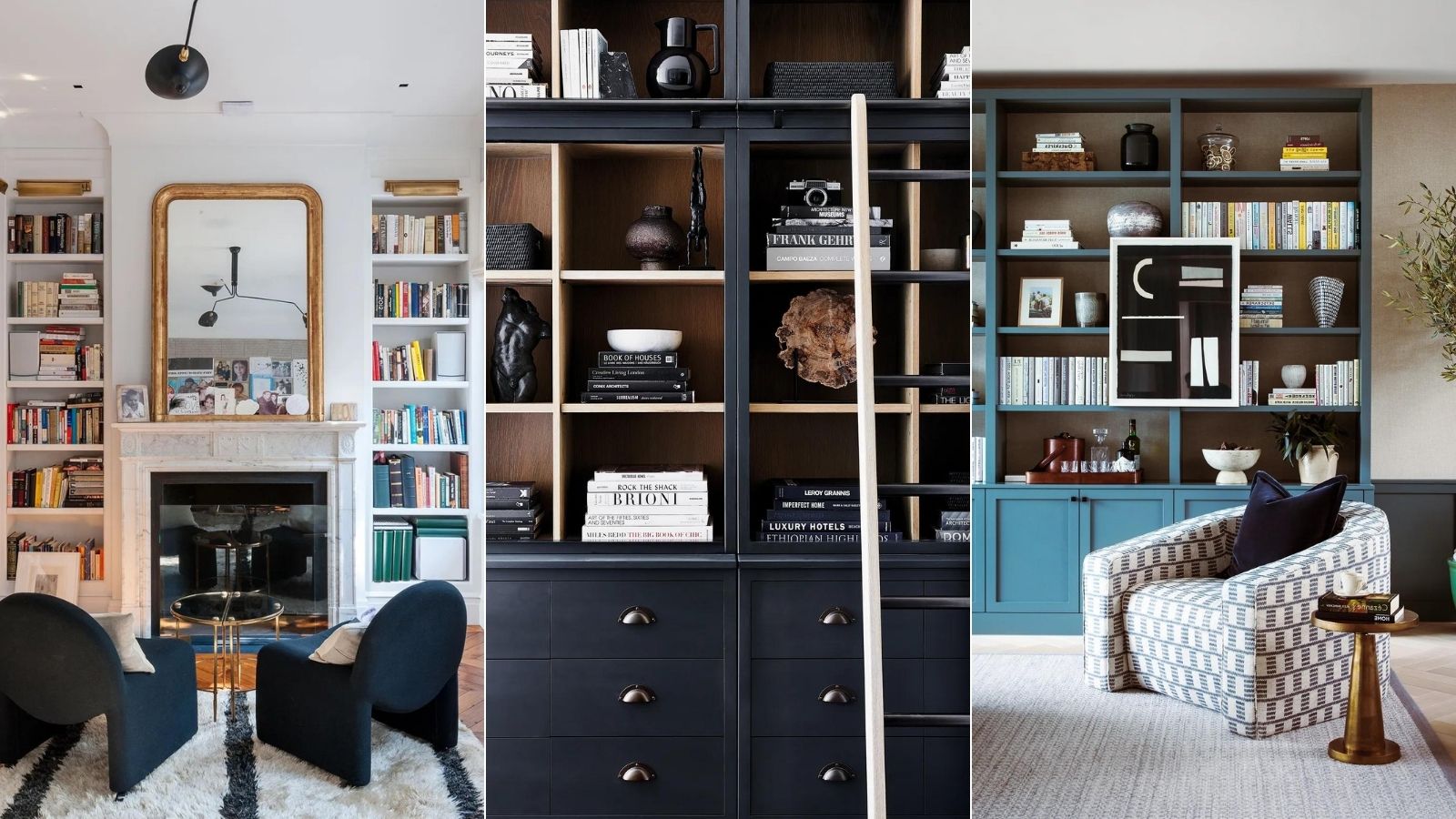
How to Style Open Shelving So It Doesn’t Look Cluttered
Open shelving gets blamed for looking messy, but the shelves aren’t the problem. Most cluttered shelving comes down to two fixable habits: filling every inch of space and grouping objects by what you own instead of by how they actually look together.
Leave at Least 30 Percent of the Shelf Empty
Negative space is what makes styled shelving read as curated instead of crammed. As a working rule, a third of every shelf’s visible surface should be empty air, not covered edge to edge with books and objects.
This is the single hardest instruction for most people to follow, because the instinct with open storage is to use every available inch. Resist it. A shelf with breathing room around a few well-chosen objects photographs and lives better than one stuffed with everything you own.
Group Objects in Odd Numbers
Threes and fives read as intentional in a way that pairs and even numbers rarely do. This isn’t superstition, it’s how the eye processes asymmetry: odd-numbered groupings create a visual triangle that feels balanced without being rigid.
When you’re arranging a cluster of books, a small plant, and a decorative object, try the group at three items first. If it feels sparse, add a fourth only if it clearly supports the visual triangle rather than flattening it into a straight line.
Vary Height, Never Line Everything Up Flat
Books standing upright, a stack lying flat with an object on top, and a taller vase or frame all on the same shelf create the height variation that makes a shelf feel dynamic. A shelf where everything is the same height, whether that’s all upright books or all short objects, reads as static no matter how nice the individual pieces are.
A simple formula: on any given shelf, aim for one tall element, one medium element, and one low, horizontal element (like a stack of books) to anchor the arrangement.
| Shelf Zone | Suggested Height Mix | Example |
| Back of shelf | Tallest element | Framed art propped against the wall |
| Middle | Medium height | Vase, small sculpture, plant |
| Front | Lowest, horizontal | Stacked books with a small object on top |
Repeat One Material or Color Across Shelves
If you have multiple shelves in one unit, repeating a color or material (a specific wood tone, black frames, terracotta pots) on at least two different shelves ties the whole piece together visually. Without a repeated thread, each shelf can look like a separate, disconnected display rather than one cohesive unit.
This is especially important on tall bookcases where the eye travels up and down. Pick one anchor color or material and place it at least twice, ideally not on adjacent shelves, so the eye naturally connects the top and bottom of the piece.
Kitchen Open Shelving Has Its Own Rules
Kitchen shelves face grease, dust, and daily use, so they need a slightly different approach than a living room bookcase. Reserve open shelves for items you use often enough to dust naturally, like everyday dishware and glasses, and keep rarely used items in closed cabinets instead.
Group dishware by color or material rather than by set, stack plates no more than 8 to 10 high for stability, and leave one shelf entirely for a small plant or a single decorative object so the whole run doesn’t read as purely functional storage.
What Not to Put on Open Kitchen Shelves
A few categories that almost always look messy on open kitchen shelving:
- Mismatched plastic food storage containers
- Small appliances used less than once a week
- Anything with visible labels or packaging
- More than two mugs of different, clashing colors grouped together
Rotate Seasonally Instead of Buying More Decor
Open shelving styled once and never touched again tends to accumulate clutter as new items get added without anything being removed. Treat your shelves like a small, rotating display: swap in a few seasonal elements (a bowl of citrus, a different plant, a stack of books relevant to the season) every couple of months rather than continuously adding new permanent objects.
Lighting Makes or Breaks a Styled Shelf
Even a perfectly arranged shelf falls flat in dim, shadowed corners. A small battery-powered puck light or a plug-in LED strip tucked along the underside of the shelf above adds gentle definition to whatever’s arranged below, especially in built-ins or corners that don’t get much natural light.
Warm-toned lighting, in the same 2700K to 3000K range recommended for the rest of the home, keeps a styled shelf from looking like a museum display case and instead makes it feel like a natural extension of the room’s overall atmosphere.
Living Room Shelving Versus Bedroom Shelving
Living room shelves tend to carry more decorative weight since they’re often the focal point of the whole room, so leaning into varied heights, art, and a couple of larger statement objects works well there. Bedroom shelving usually benefits from a calmer, more restrained approach, fewer objects, softer colors, and more empty space, since the room’s job is rest rather than display.
If you’re working with a single shelving unit that has to do both jobs, like a shelf in a studio apartment, split the difference: keep the top two-thirds more curated and decorative, and reserve the lower shelf for practical, everyday items that don’t need to look styled at all times.
A Step-by-Step Process for Styling a Shelf From Scratch
When a client’s shelf feels overwhelming to tackle, I walk them through the same sequence every time:
- Empty the entire shelf and sort everything into keep, store elsewhere, and donate piles
- Choose your ‘keep’ items down to roughly 60 percent of what you started with
- Place your tallest, largest items first to establish the anchor points
- Add mid-height objects in odd-numbered groupings around those anchors
- Fill remaining gaps with small, low objects like books or a single small plant
- Step back, remove one item if any grouping feels crowded, and reassess after a day
Open Shelving in Bathrooms
Bathroom shelving deals with humidity in a way kitchen and living room shelves don’t, which limits some material choices. Rolled towels in a matching color, glass jars for cotton balls or bath salts, and a single plant that tolerates humidity well (like a pothos or fern) all hold up better than porous wood objects or anything with metal that can tarnish from moisture over time.
When Closed Storage Is the Better Choice
Open shelving isn’t the right answer for every space, and knowing when to choose closed cabinetry instead is part of styling well. Rooms with heavy dust exposure, homes with very young children who can reach lower shelves, or collections you genuinely don’t want on display every day are all better served by a cabinet with doors.
A mix of both, open shelving for what you’re proud to display and closed storage for what you actually use daily but don’t want visible, tends to outperform an all-open or all-closed approach in most real homes.
Frequently Asked Questions
How full should open shelves be?
Aim to leave roughly 30 percent of each shelf’s visible space empty. Fully packed shelves read as cluttered even when every individual object is attractive on its own.
Should books be organized by color on open shelving?
Color organization works well for pure visual impact but can make finding a specific book frustrating. A middle ground many designers use is grouping loosely by color within sections that are still organized by subject or size.
Is open shelving practical in a kitchen with kids or pets?
It can be, if you reserve it for sturdier, frequently used items and keep breakables or anything precious in closed cabinets at a higher shelf or in a separate storage area.
What is the odd-number rule in shelf styling?
Grouping decorative objects in threes or fives instead of twos or fours. Odd numbers naturally create an asymmetrical visual triangle that reads as intentional, while even numbers tend to look either too matched or too symmetrical.
How often should I restyle open shelves?
Every couple of months is a reasonable rhythm for a light refresh, swapping a few seasonal or rotating pieces, rather than a full overhaul. This keeps shelves feeling current without constant new purchases.
Do open shelves need their own lighting?
It helps, especially in corners or built-ins without much natural light. A small battery-powered puck light or plug-in LED strip under the shelf above adds definition and makes a styled arrangement stand out more clearly.
What’s a quick way to know if my shelf is too full?
If you can’t identify at least one clear empty patch of visible shelf surface per section, it’s overfilled. Remove the least meaningful object first and reassess before adding anything new.
Should every shelf in a bookcase be styled the same way?
No. Alternating a fuller, more book-heavy shelf with a sparser, more decorative one across a tall bookcase creates rhythm and keeps the whole unit from reading as either a pure library or a pure display case.
Final Thoughts
Open shelving looks cluttered when it’s full, not when it’s styled well. Leave real negative space, group in odd numbers, vary height deliberately, and repeat one material across the unit. Those four habits do more for a shelf’s appearance than any amount of new decor ever will.

