How to Style a Fireplace Mantel
A fireplace mantel already has the hardest job in the room done for it, it’s a built-in focal point, which is exactly why a poorly styled one stands out so clearly. Getting the layering right here matters more than almost any other surface in the house.
Start With What’s Above the Mantel
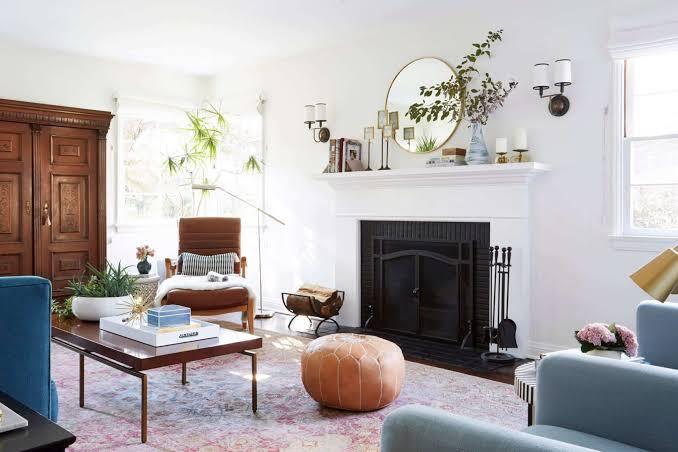
Whatever hangs above the mantel, a mirror, art, or a TV, sets the scale for everything below it. As a general rule, that piece should be roughly two-thirds the width of the mantel shelf itself, and hung with 4 to 8 inches of space between the top of the mantel and the bottom of the piece.
If a television sits above the fireplace, which is common but visually tricky, styling the mantel below it more simply, fewer objects, more negative space, keeps the arrangement from competing with the screen’s bulk and dark, flat surface when it’s off.
Layer in Three Depths, Not Just a Row of Objects
A common styling mistake is placing every object in a single flat row facing forward, which reads as a shelf display rather than a considered vignette. Overlapping the layers, letting a candlestick partially obscure the base of the leaned art behind it, for instance, creates the same sense of depth a well-styled bookshelf achieves.
| Depth | Role | Example |
| Back layer | Tallest, sets the backdrop | Large mirror or art leaned against the wall |
| Middle layer | Medium height, adds substance | A pair of candlesticks or a small sculpture |
| Front layer | Low, grounds the arrangement | A stack of books, a small plant, or a low object |
Use Asymmetry Instead of a Perfectly Matched Pair
A matched pair of candlesticks or vases on either end of the mantel is a safe, classic choice, but an asymmetrical arrangement, a taller grouping on one side balanced by a shorter, wider grouping on the other, tends to look more current and less like a hotel lobby.
If you’re nervous about asymmetry, start with one matched pair as your anchor and then break the symmetry everywhere else on the mantel, in the greenery, the books, or the smaller objects filling in the gaps.
Greenery Adds Life Without Overwhelming the Display
A trailing plant, a few stems in a simple vase, or a small wreath leaned against the mirror all introduce organic softness that keeps a mantel from feeling like a static museum shelf. Real greenery needs enough light reaching the mantel to survive, which isn’t always the case in a room where the fireplace wall lacks a nearby window; a high-quality faux stem is a reasonable substitute in that situation.
Avoid placing live greenery directly on a mantel above an active, frequently used wood-burning fireplace, since heat and occasional smoke exposure will damage most plants over time regardless of watering.
Seasonal Rotation Keeps the Mantel From Going Stale
A mantel is one of the easiest surfaces in a home to refresh seasonally since the core anchor piece (the mirror or art above it) rarely changes while the smaller objects rotate. Swap in warmer-toned candles and richer greenery for winter, then lighter, fresher stems and a brighter color palette for spring and summer.
Keep a small bin of seasonal mantel decor stored separately from everyday decor items, so swapping the display takes minutes rather than requiring you to dig through general storage boxes each time the season changes.
Safety Considerations for a Working Fireplace
For a mantel above a fireplace that’s actually used regularly, keep flammable materials, dried greenery, paper items, thin fabric, at a safe distance from the firebox opening, generally at least the width of the mantel’s overhang itself. Check your local building code or fireplace manufacturer guidance for the specific clearance required in your home, since this varies based on fireplace type and mantel depth.
Candles on a working mantel should be placed toward the back or sides rather than directly above the firebox opening, both for safety and because heat rising from an active fire can damage or discolor candles placed too close to the opening over repeated use.
Mantels Without a Fireplace Below Them
A decorative mantel shelf mounted on a wall with no working fireplace beneath it (increasingly common in homes styled around a faux or non-functional fireplace surround) follows the exact same styling principles as a working mantel, since the visual role stays the same even without an actual firebox.
This kind of mantel actually offers more styling freedom, since there’s no heat, smoke, or safety clearance to consider. Candles, dried florals, and other more delicate materials that wouldn’t be advisable above an active fire can be used freely on a purely decorative mantel shelf.
Matching Mantel Style to the Room’s Overall Character
A rustic stone or reclaimed wood mantel generally calls for more organic, textured styling objects, pottery, natural wood bowls, dried branches, while a sleek marble or painted mantel in a more contemporary room suits cleaner lines and fewer, more architectural objects. Matching the mantel’s own material character to the objects placed on it keeps the whole display feeling unified rather than like two unrelated design choices layered on top of each other.
Adjusting Mantel Styling for the Room’s Overall Traffic
A mantel in a formal living room that sees infrequent use can support a more delicate, fully staged arrangement, since it’s less likely to be disturbed by daily activity. A mantel in a heavily used family room, especially one near a play area or a spot where kids gather, benefits from a slightly more restrained approach, fewer breakable objects, sturdier materials, so the styling survives daily life without constant re-adjustment.
If pets are part of the household, particularly cats known for jumping onto elevated surfaces, weighting taller or top-heavy objects, or simply choosing shorter, more stable pieces for the mantel specifically, prevents a beautifully styled arrangement from becoming a recurring cleanup task.
Building a Mantel Styling Kit for Easy Refreshes
Keeping a small, dedicated bin of mantel-specific decor, separate from general holiday or seasonal storage, makes each refresh faster and more consistent. Include your everyday anchor pieces (the ones that stay out most of the year) plus a rotating selection of seasonal additions, so swapping the display takes minutes rather than requiring a full rethink each time.
Frequently Asked Questions
How big should art be above a fireplace mantel?
Roughly two-thirds the width of the mantel shelf, hung with 4 to 8 inches of clearance between the top of the mantel and the bottom of the piece.
Should mantel decor be symmetrical?
It doesn’t have to be. An asymmetrical arrangement, a taller grouping balanced against a shorter, wider one, often looks more current than a perfectly matched pair on either end, though starting with one matched anchor pair is a safe entry point.
How do I style a mantel with a TV mounted above it?
Keep the styling below simpler than you would without a TV, using fewer objects and more negative space so the arrangement doesn’t compete visually with the screen’s bulk and dark surface when it’s turned off.
Is it safe to put decor on a mantel above a working fireplace?
Yes, with clearance considerations. Keep flammable materials away from the firebox opening at a distance roughly equal to the mantel’s overhang, and check local code or manufacturer guidance for the specific clearance required.
How often should I change mantel decor?
Seasonally works well for most households, since the main anchor piece above the mantel typically stays the same while smaller objects, candles, and greenery rotate to match the season.
Do the same styling rules apply to a mantel without a working fireplace?
Yes, the visual role stays the same. A purely decorative mantel shelf actually offers more styling freedom, since there’s no heat or safety clearance to consider, allowing more delicate materials like candles and dried florals.
How do I style a mantel in a home with pets?
Choose shorter, more stable objects for the mantel specifically, and weight any taller or top-heavy pieces, since elevated surfaces like mantels are common jumping spots for cats and can otherwise become a recurring cleanup task.
What’s a simple way to make a plain, builder-grade mantel feel more substantial?
Adding a wood cap or a simple molding detail to the front edge of a thin, plain mantel shelf increases its visual weight considerably, giving even a basic builder-grade fireplace surround a more custom, finished appearance.
Should mantel decor change if I install a new TV above the fireplace later?
Yes, it’s worth revisiting. Adding a TV after the mantel was styled for an open wall usually means simplifying the arrangement below it, since the screen introduces new visual bulk the original display wasn’t planned around.
Final Thoughts
A fireplace mantel earns its place as a room’s focal point when it’s layered in depth, not lined up in a flat row, and when asymmetry replaces a perfectly matched, static pair. Anchor it with correctly scaled art or a mirror above, layer three depths of objects, and rotate the smaller pieces seasonally to keep it feeling current year-round.